


Den Kroniske Uskyld
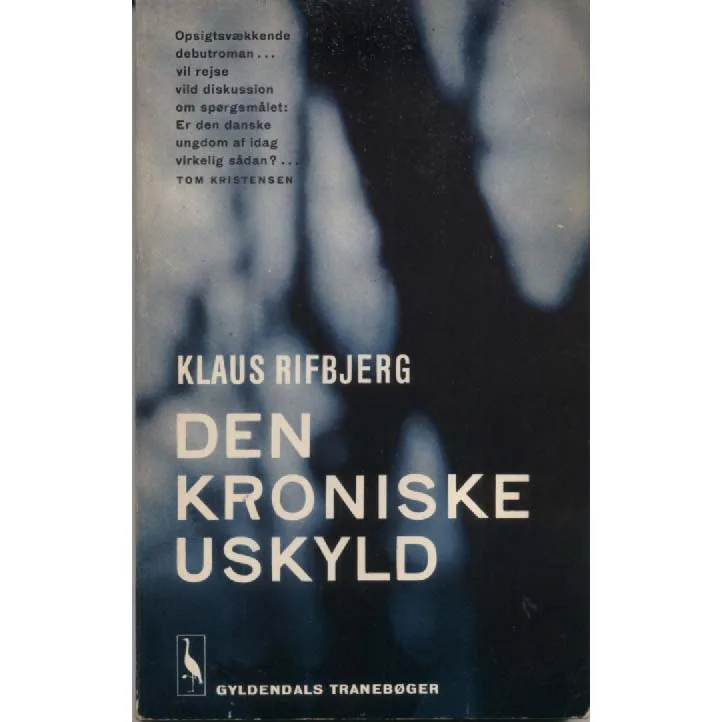
Publisher: Gyldendals Traneboger
Format: Paperback
ISBN: none
Some novels announce themselves with explosions, murders or dramatic prophecies. Den Kroniske Uskyld (“Chronic Innocence”) by Klaus Rifbjerg instead arrives with the unmistakable aura of Scandinavian literary sophistication: emotionally complicated young people, dangerous levels of introspection and the lingering suspicion that absolutely nobody involved is going to emerge psychologically intact.
First published in 1958 and later becoming one of the defining Danish novels of its generation, Den Kroniske Uskyld occupies that glorious territory where youthful idealism collides headfirst with adulthood, desire, guilt and the uncomfortable discovery that human beings are considerably messier than they looked in adolescence. In other words, it is exactly the sort of book Scandinavian writers specialise in with almost supernatural efficiency.
The title alone is magnificent. Chronic Innocence sounds less like a novel and more like a medical condition suffered exclusively by philosophy students and people who insist vinyl records “sound warmer.” One can practically hear the jazz music and cigarette smoke drifting through the pages already. This is literature for readers who enjoy emotional ambiguity served with existential side effects.
Klaus Rifbjerg himself was one of Denmark’s literary giants, prolific to an almost unreasonable degree, producing novels, poetry, essays and plays with the energy of a man who apparently never once sat quietly without turning his observations into art. Here he captures youth not as a cheerful coming-of-age adventure but as a confused, hormonal, fragile psychological battlefield where friendships and identities wobble dangerously under the pressure of reality.
Naturally, because this is a 1967 Gyldendals Tranebøger paperback, the object itself radiates intellectual credibility. One imagines it being carried around by earnest students in black roll-neck jumpers who spent entire evenings discussing alienation in cafés while carefully pretending not to be devastated by their personal lives. It almost certainly spent part of the 1970s on a shelf beside Camus, Sartre and at least one book that nobody actually finished.
What makes novels like this so fascinating is how modern they still feel. Beneath the mid-century Scandinavian cool lies an eternal truth: young adults remain experts at confusing desire, identity and emotional chaos while attempting to appear sophisticated. Rifbjerg understood that perfectly. Long before social media allowed everyone to publicly curate their personalities, his characters were already performing versions of themselves in front of one another with quietly disastrous consequences.
The irony, of course, is that books once considered serious literary explorations of post-war youth now also function as accidental time capsules from an era when Europeans apparently processed emotional trauma entirely through chain-smoking, meaningful silences and conversations conducted in sparsely furnished apartments. Modern self-help culture could probably learn a thing or two from Scandinavian fiction’s willingness to simply admit that life is often bewildering.
Condition-wise, this copy is listed as Good, meaning it has survived remarkably well despite decades of possible ownership by students, intellectuals and romantically doomed readers underlining passages they believed perfectly captured their emotional condition at age twenty-three. There may even be annotations from somebody who once thought this novel explained their life completely after a difficult breakup and several glasses of wine.
An ideal addition for collectors of European literature, lovers of Scandinavian fiction, or anyone nostalgic for a period when novels expected readers to confront human complexity rather than merely optimise their morning routines.
Keep browsing: See more Danish books Other books by Klaus Rifbjerg
